
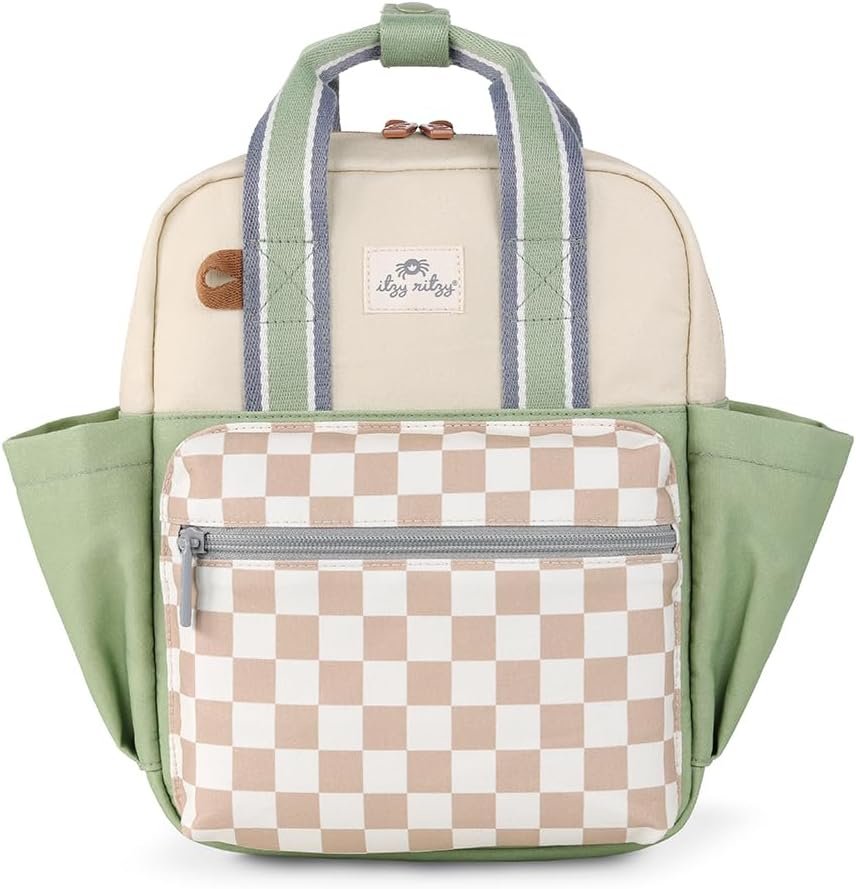
The Itzy Ritzy Checkerboard Toddler Backpack: A Daycare-Ready Companion
The Itzy Ritzy Checkerboard Toddler Backpack is a daycare-focused bag built around a wipeable fabric lining, adjustable shoulder straps, two exterior side pockets, and a bold checkerboard print designed to appeal to young children. This itzy ritzy toddler backpack review examines how those specific construction choices hold up for parents who need a bag their toddler can carry independently between home, daycare, preschool, or short outings. Unlike rolling luggage or oversized travel packs, this bag is sized and shaped for small bodies rather than for checked-bag travel, which shapes almost every decision a parent makes when considering it.
The intended user profile is fairly narrow: parents and caregivers of toddlers and young preschoolers, roughly ages two through five, who need a daily-use bag for a change of clothes, snacks, a small comfort item, and daycare paperwork rather than a suitcase substitute. Its spacious interior and side pocket layout suit the modest but real packing needs of a young child’s daily routine, while the wipeable lining specifically targets the messes-diaper leaks, spilled snacks, art project residue-that are routine at this age. The adjustable straps and lightweight construction also matter because they determine whether a toddler can wear the bag comfortably enough to want to carry it, which is often the real test of a kids’ backpack’s design.
Quick Overview
| Feature | Details |
|---|---|
| Bag type | Soft-sided toddler backpack, not a wheeled suitcase or hard-shell carry-on |
| Primary use case | Daycare, preschool drop-off, short outings, and light travel days |
| Capacity | Spacious main compartment sized for a change of clothes, light layers, and snacks |
| Materials | Durable exterior fabric with a wipeable, easy-clean interior lining |
| Straps | Adjustable shoulder straps sized for growing toddlers and young preschoolers |
| Pockets | Two exterior side pockets for water bottles, wipes, or small essentials |
| Personalization | Built-in name label for daycare and preschool identification |
| Design | Checkerboard print in a gender-neutral, high-visibility pattern |
| Age suitability | Roughly toddler through early preschool years, approximately ages two to five |
| Carry-on compliance | Not marketed or sized as an airline carry-on personal item |
These specifications point to a bag optimized for frequency of use rather than trip size. Its wipeable lining and side pocket layout address the daily wear-and-tear of daycare drop-offs more directly than the packing volume needed for a week-long vacation. Families who need a bag primarily for structured, everyday use will find the feature set well matched, while those seeking true travel luggage for a toddler will need to look at the practical limits addressed later in this review.

Itzy Ritzy Toddler Backpack Review: Everyday Use and Trip Suitability
Evaluating any kids’ bag starts with matching its format to the trips it will actually take, and the Itzy Ritzy Checkerboard Toddler Backpack is built as a soft-sided daypack rather than as structured luggage. That construction favors light, frequent use over heavy or extended packing, which is precisely the pattern most toddlers and preschoolers generate: a daily rotation of a spare outfit, snacks, and a comfort item rather than a week’s worth of clothing. The absence of wheels or a telescoping handle reflects its intended role as a carried daypack for children too young to reliably pull rolling luggage through a hallway or airport terminal.
Daycare and Preschool Fit
Daycare and preschool settings reward bags that are quick to open, easy to label, and simple for staff to identify at pickup, and this backpack’s built-in name label and single main compartment address that need directly. Teachers and caregivers managing a room full of nearly identical cubbies benefit from a bag that is visually distinct through its checkerboard print and clearly labeled, reducing mix-ups. The wipeable lining also matters in this setting, since daycare bags routinely absorb spilled milk, leaking diapers, or messy art supplies that need to be cleaned quickly between uses.
Short Trips, Travel Days, and Outings
Beyond daycare, the backpack’s format suits short outings such as a day at grandparents’ house, a museum visit, or a weekend trip where a toddler only needs a modest set of belongings. Parents often hand a toddler a bag like this one to carry their own snacks, a small toy, or a change of clothes, building early independence without overloading a small frame. Because the bag is soft-sided and collapses flat when not full, it also tucks easily into a larger adult travel bag or stroller basket for trips where a toddler’s items need to travel alongside the rest of the family’s luggage.
Where It Falls Short as True Travel Luggage
Parents specifically shopping for airline travel gear should note that this backpack is not built or marketed as a carry-on personal item, and its soft, unstructured shape means it will not protect fragile items the way a hard-shell case would. It also lacks the volume needed to serve as a toddler’s sole bag for multi-day trips, since its interior is sized for daily essentials rather than several days of clothing. Families planning frequent flights with a toddler may want to pair this backpack with a larger checked bag rather than expecting it to function as standalone travel luggage.
Capacity, Packing Space, and Sizing for Small Bodies
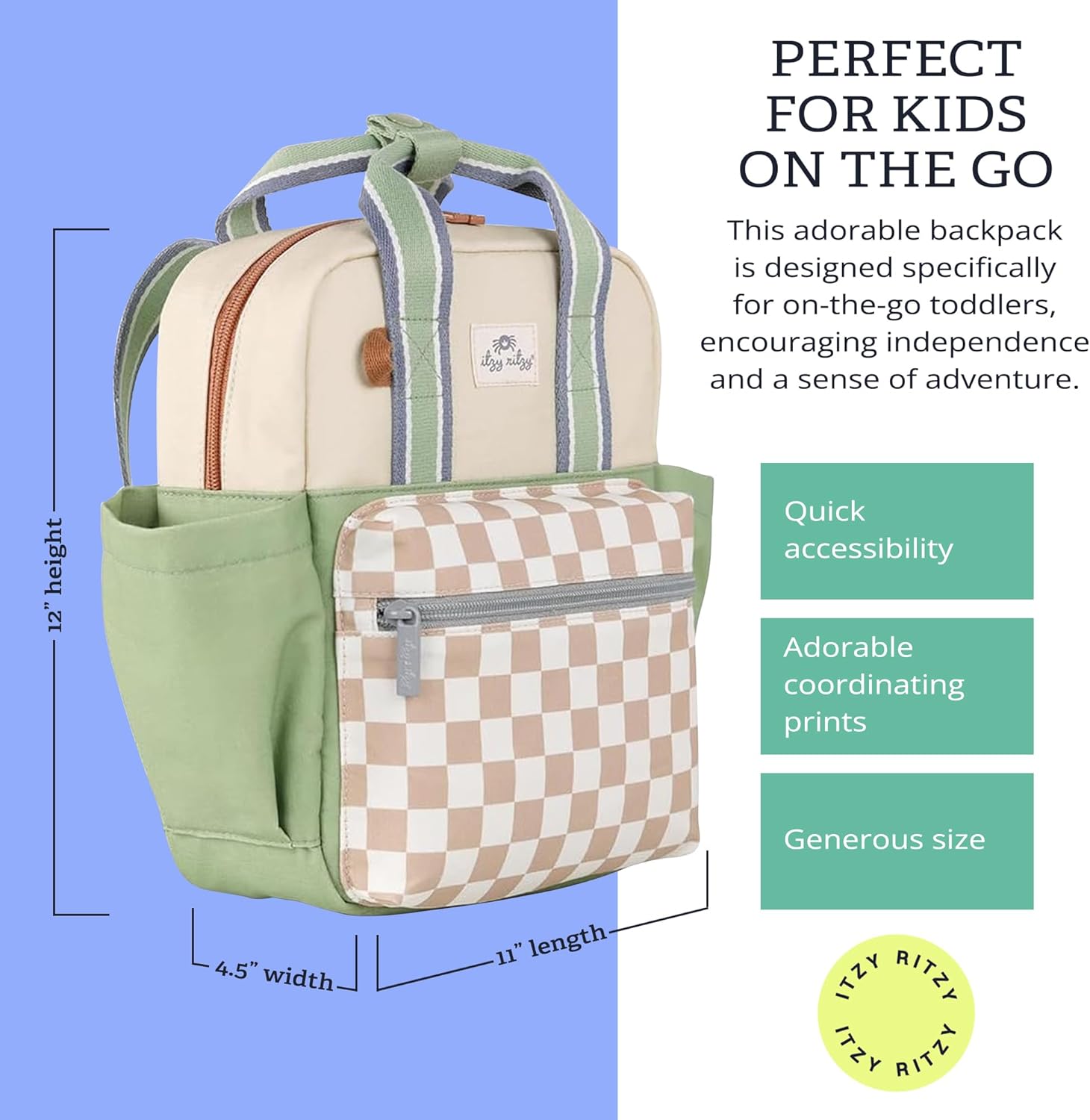
The backpack’s capacity is best understood in the context of a toddler’s actual daily needs rather than adult packing standards, and its spacious main compartment appears sized accordingly. It comfortably accommodates a folded change of clothes, a light jacket, and a handful of snacks or small toys without requiring the child to force the zipper closed. The two exterior side pockets extend that capacity for items needing faster access, such as a water bottle or wipes, without requiring the main compartment to be reopened every time a caregiver needs something quick.

Main Compartment Volume
The main compartment is described as spacious relative to the bag’s toddler-appropriate footprint, which means it prioritizes usable interior space over a bulky or oversized exterior silhouette. This balance matters for younger children specifically, since an overly large bag can throw off a toddler’s center of gravity and make independent carrying uncomfortable even when the straps are properly adjusted. A single large compartment rather than multiple small ones also simplifies packing and unpacking for both the child and the adult helping them, since there are fewer zippers and flaps to manage during a rushed morning drop-off.
Side Pockets for Extras
The two side pockets are a practical addition for items that need to stay separate from the main compartment, most commonly a water bottle, hand sanitizer, or a set of wipes that a caregiver wants within easy reach. Keeping these items in dedicated exterior pockets also reduces the chance that a leaking water bottle or an opened wipes pack will make contact with clothing or snacks stored inside the main compartment. For daycare use in particular, this separation helps staff quickly locate a specific item without unpacking the entire bag.
Sizing Relative to Toddler and Preschooler Frames
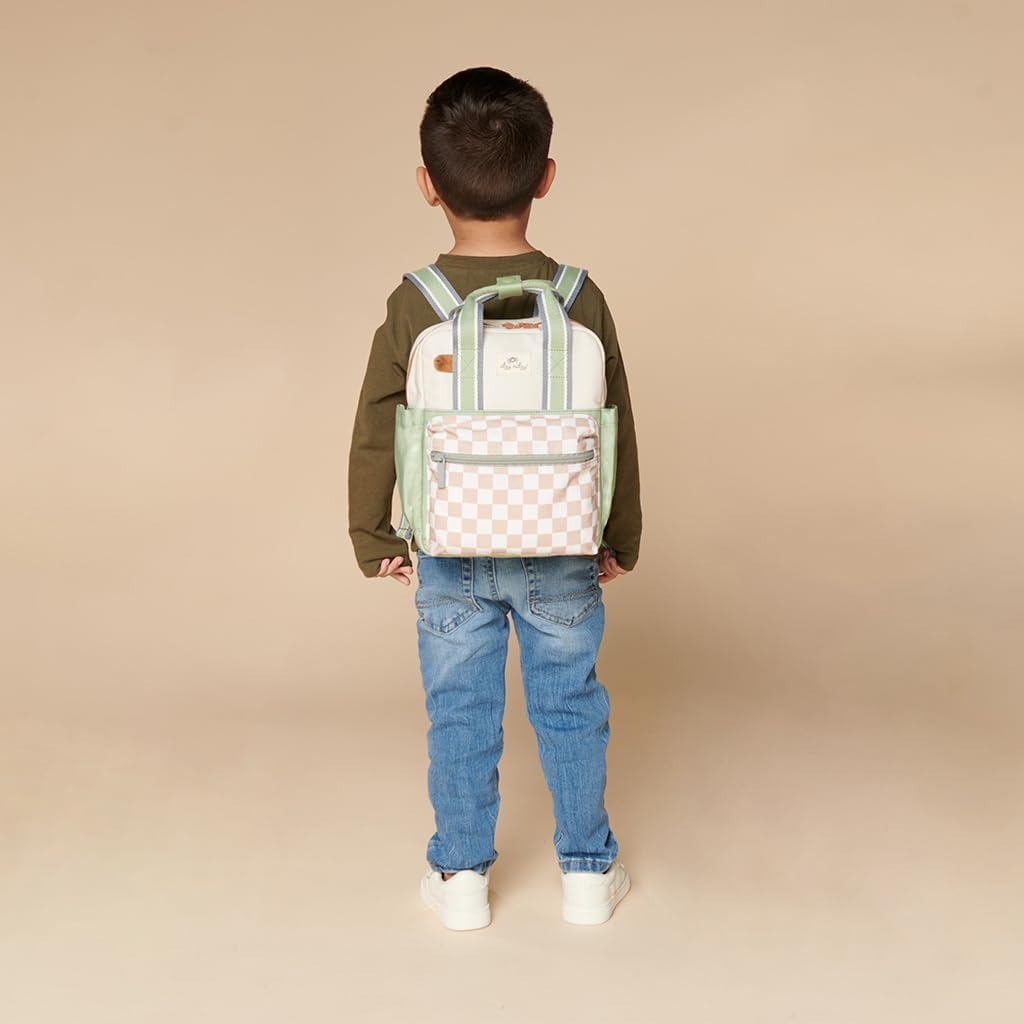
Because the bag is designed around toddler and early preschooler proportions, its dimensions and strap placement are scaled down from standard child or adult backpacks rather than simply being a smaller version of an oversized bag. This sizing approach is significant because a backpack that is proportionally too large for a toddler’s torso can cause the bag to hang too low, throwing off balance and making the straps slip off small shoulders. A properly scaled bag like this one is more likely to sit correctly on a toddler’s back, supporting the goal of the child being able to wear and carry it with minimal adult assistance.
Materials, Durability, and the Wipeable Fabric Lining
Durability expectations for a toddler bag differ from those for adult luggage, since the primary threats are daily spills, floor drags, and repeated tugging rather than airline baggage handling. The exterior fabric is built to withstand this everyday abuse, while the wipeable interior lining directly targets the liquid and food-related messes almost guaranteed with a child in this age range. Together, these choices suggest a bag engineered for longevity through easy maintenance rather than heavy-duty ruggedness alone.
Exterior Fabric and Checkerboard Print Construction
The exterior fabric carries the bold checkerboard print and is constructed to hold its shape and color through repeated daily use, floor drags, and the general wear that comes from a toddler handling their own bag. Because this print is woven or printed into a durable fabric rather than added as a fragile decorative layer, it is less likely to crack, peel, or fade the way some printed vinyl or PVC-coated bags can after repeated washing or sun exposure. This matters for a bag that will likely see daily use for one to two years as a child moves through toddlerhood into early preschool.
Wipeable Interior Lining for Spills and Messes
The wipeable fabric lining is arguably the backpack’s most functionally important material feature for its intended daycare use case, since it allows a caregiver to quickly clean up a spilled juice box or a diaper leak without needing to run the entire bag through a washing machine. This kind of lining typically uses a coated or laminated fabric that resists liquid absorption long enough for a quick wipe-down to fully remove the mess. For families managing multiple bag changes per week, a lining that supports spot-cleaning rather than full washes saves meaningful time and extends the practical lifespan of the bag between deep cleans.
Stitching, Zippers, and Long-Term Wear
Seams and zipper pulls are common failure points on kids’ bags, since toddlers frequently yank zippers at awkward angles or overstuff compartments beyond their intended capacity. A backpack designed specifically for this age group typically reinforces high-stress points such as strap attachments and the main zipper track, since these are the areas most likely to fail first under a toddler’s less-than-gentle handling. While no soft-sided bag is immune to wear over months of daily use, construction aimed at this specific use case tends to outlast bags not purpose-built for toddler handling patterns.
Comfort, Fit, and Ease of Use for Toddlers
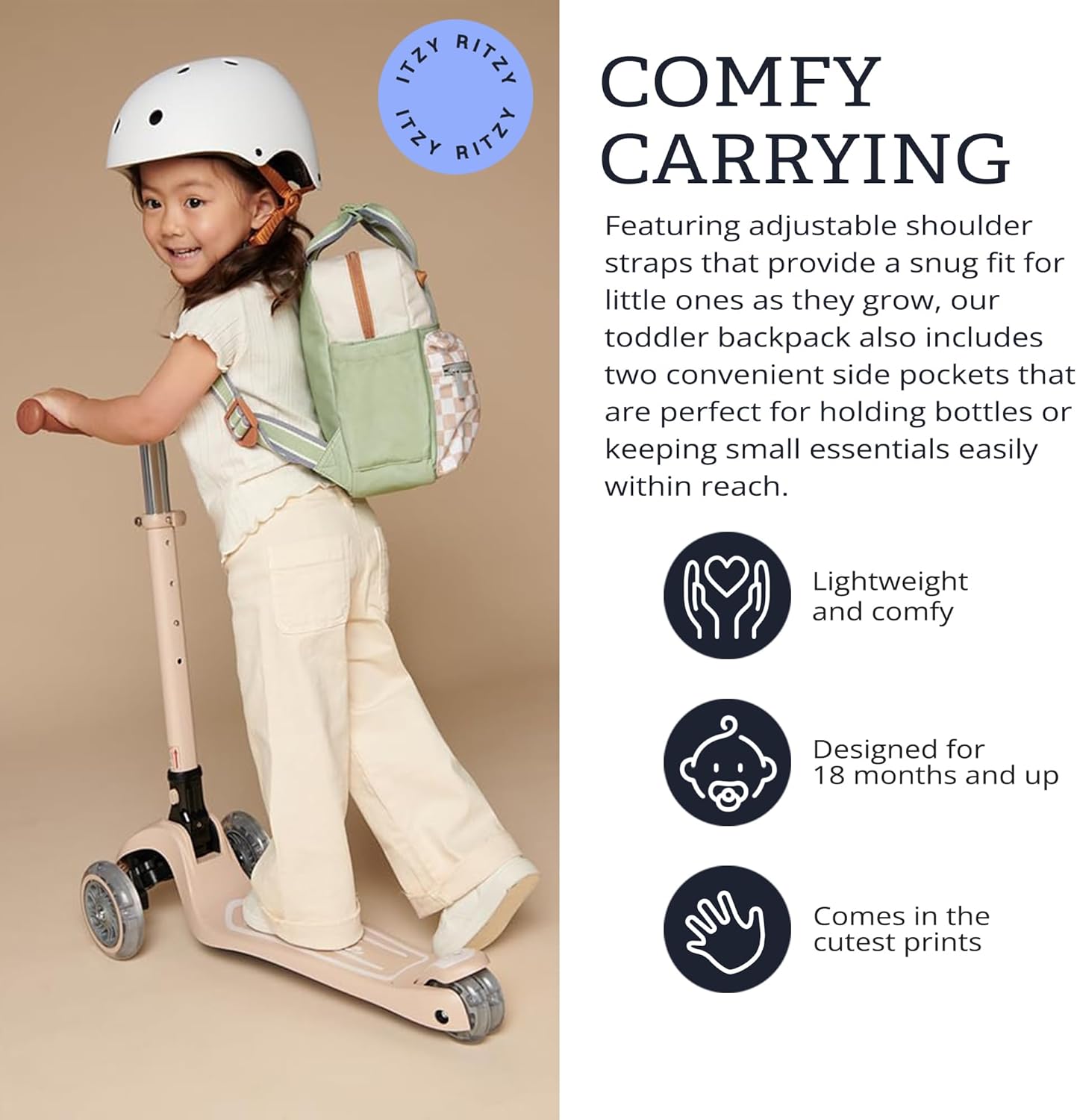
A toddler backpack succeeds or fails largely on whether the child can wear it comfortably enough to want to carry it, which makes strap design and overall weight two of the most important factors in this review. The adjustable shoulder straps allow the bag to be resized as a child grows, extending its useful window beyond a single age bracket. Combined with the bag’s lightweight, soft-sided construction, this creates a backpack less likely to feel burdensome on small shoulders compared to structured or heavier alternatives.

Adjustable Shoulder Straps
Adjustable straps are particularly valuable for a toddler bag because children in the two-to-five age range go through rapid growth spurts, and a backpack that fit correctly six months ago may sit too high or too low without adjustment. Being able to lengthen or shorten the straps also allows the same bag to be worn over different layers of clothing, such as a heavier winter coat, without the straps cutting into a child’s shoulders. This adjustability is one of the more practical features separating a bag designed to last through a full toddler stage from one sized for a single season.
Weight and Independent Carrying
An empty toddler backpack needs to be light enough that even when packed with a change of clothes and snacks, it does not become a burden a two- or three-year-old struggles to carry. The soft-sided, single-compartment design of this backpack keeps its unloaded weight low, which supports the broader goal of encouraging a toddler to carry their own bag rather than relying entirely on a caregiver. This independence-building aspect is often cited as a meaningful benefit of toddler-specific bags compared to simply using a scaled-down adult backpack.
Getting In and Out: Zipper and Closure Access
Ease of use extends to how easily a toddler or a rushed caregiver can open and close the bag, and a single main compartment with a straightforward zipper closure reduces the fumbling that can occur with bags featuring multiple flaps, buckles, or drawstrings. For a toddler just learning to manage zippers independently, a single large zipper pull is considerably easier to grasp and operate than smaller or more intricate closures. This simplicity also speeds up daycare handoffs, when a caregiver often needs to quickly stash or retrieve items with a child in tow.
Organization, Personalization, and Design Appeal
Beyond raw capacity, how a bag organizes its contents and how it looks to a toddler both play a role in whether it gets used consistently, and this backpack addresses both through its name label and checkerboard print. Organization here is intentionally simple rather than compartmentalized, reflecting the reality that most toddlers and caregivers benefit more from quick access than from a complex system of zippered dividers. The visual design, meanwhile, is built to stand out in a daycare cubby and appeal directly to a young child’s sense of ownership over their belongings.

Interior Organization and the Name Label
The built-in name label is a small but meaningful organizational feature, since daycare and preschool environments often involve dozens of similar-looking bags stored in close proximity. Being able to clearly write or attach a child’s name directly to the bag reduces the chance of mix-ups at pickup time and helps staff quickly identify which bag belongs to which child. Combined with the single spacious main compartment, the organizational philosophy here favors simplicity and quick identification over multiple small pockets that a toddler is unlikely to use correctly on their own.
Checkerboard Design and Age Range Appeal
The checkerboard print is a deliberately bold, high-contrast pattern that tends to appeal broadly across genders and age groups within the toddler and early preschool range, unlike character-licensed designs that a child may outgrow in preference within a year. This kind of pattern also tends to hide minor stains or scuffs better than solid light colors, which is a practical benefit given how much wear a daily-use daycare bag absorbs. Because the print is not tied to a specific trend or media character, the bag is also more likely to still feel visually appealing to a child as they move from toddlerhood into their preschool years.
Who Should Avoid This Backpack
Families searching for a full-size travel bag capable of holding several days of clothing, or for a rolling suitcase a young child can pull independently through an airport, should look elsewhere, since this backpack is not designed or sized for that role. Parents who prioritize highly compartmentalized organization, with multiple zippered pockets for separating specific items, may also find the single main compartment too simple for their preferences. Similarly, caregivers seeking a bag tied to a specific licensed character rather than a general pattern like checkerboard may prefer a different design option.

Pros & Cons
Pros
- The wipeable fabric lining allows quick clean-up of the spills, leaks, and food messes that are routine with toddlers, extending the time between full washes.
- Adjustable shoulder straps let the bag grow with a child across multiple sizes and seasons, extending its useful lifespan beyond a single year.
- The spacious main compartment comfortably holds a change of clothes, light layers, and snacks without requiring the child to force the zipper shut.
- Two exterior side pockets provide fast access to water bottles or wipes without needing to open the main compartment.
- The built-in name label simplifies identification in daycare and preschool settings where many similar bags are stored together.
- The checkerboard print is bold, gender-neutral, and resistant to visually showing minor stains compared to plain, light-colored fabric.
- Lightweight, soft-sided construction keeps the bag manageable for toddlers to carry independently, supporting early independence.
- A single, simple main compartment with one primary zipper is easier for a toddler or a rushed caregiver to operate than bags with multiple closures.
Cons
- The bag is not sized or marketed as an airline carry-on personal item, limiting its usefulness for parents seeking dedicated toddler travel luggage.
- Its soft-sided, single-compartment design offers less organization than backpacks with multiple zippered pockets, which may frustrate caregivers who prefer highly segmented storage.
- Without wheels or a rigid frame, the bag is unsuitable for multi-day trips requiring a larger volume of packed clothing.
- The unstructured shape provides limited protection for fragile items compared to hard-shell cases.
- Families wanting a licensed-character design rather than a general pattern will need to consider alternative backpacks.
Final Verdict: Who This Product Is Best For (and Who Should Skip It)
The Itzy Ritzy Checkerboard Toddler Backpack is best suited to parents and caregivers of toddlers and young preschoolers who need a reliable, easy-to-clean bag for daily daycare or preschool use rather than a travel-focused suitcase. Its combination of a wipeable lining, adjustable straps, and a simple, spacious main compartment directly addresses the recurring challenges of this age group: frequent spills, rapid growth, and the need for a bag light enough for a toddler to carry independently. The built-in name label and distinctive checkerboard print further support its role as an everyday daycare bag by making identification and ownership easier for both the child and the caregivers managing drop-off and pickup.
Families should look elsewhere if their primary need is structured travel luggage capable of holding several days of clothing, or a wheeled bag a young child can pull independently through an airport, since this backpack’s soft-sided, single-compartment design is not built for that purpose. Caregivers who prefer highly compartmentalized organization or a licensed-character print rather than a general pattern may also find better alternatives elsewhere in the toddler backpack category. Compared to other toddler bags available in 2026, this backpack occupies a clear niche as a daily-use, easy-clean daycare companion rather than an all-purpose travel bag, and its value is strongest for households prioritizing that specific use case over broader packing capacity.
Frequently Asked Questions (FAQs)
Is the Itzy Ritzy Checkerboard Toddler Backpack suitable for airline travel?
It is not designed or marketed as an airline carry-on personal item, and its soft-sided, single-compartment construction favors light daily use over structured travel luggage. It lacks the rigid shape and packing volume that dedicated flight bags typically offer. Families needing a bag specifically for flights should look for products explicitly built to meet carry-on dimension and structure requirements, since this backpack is better suited to daycare drop-offs and short outings rather than airline-specific travel demands.
What age range is this toddler backpack designed for?
The backpack is generally suited to toddlers and early preschoolers, roughly ages two through five, based on its adjustable straps and compact, toddler-scaled proportions. The adjustable strap design allows some flexibility as a child grows within that range, extending the bag’s useful window beyond a single size, though older preschool and school-age children will likely need a larger, differently proportioned backpack.
How does the wipeable fabric lining work for cleaning spills?
The interior lining uses a coated or laminated fabric that resists liquid absorption, allowing spills such as juice, milk, or diaper leaks to be wiped away with a damp cloth rather than requiring a full machine wash. This spot-cleaning approach saves meaningful time for caregivers managing frequent daycare use, helps the bag stay presentable between drop-offs, and reduces the wear that repeated full washes can place on the exterior fabric and stitching over time.
Can a toddler carry this backpack independently?
The lightweight, soft-sided construction and adjustable shoulder straps are designed to make independent carrying realistic for toddlers, since the bag stays manageable even when packed with a change of clothes and snacks. Proper strap adjustment helps the bag sit correctly on a small frame rather than hanging too low, which supports a toddler’s ability to wear and manage the bag with minimal adult assistance during daycare drop-offs and everyday outings.
How much can the main compartment of this toddler backpack hold?
The main compartment is described as spacious relative to the bag’s toddler-sized footprint, generally accommodating a folded change of clothes, a light jacket, and a handful of snacks or a small toy without forcing the zipper closed. It is not intended to hold multiple days of clothing, so it functions best as a daily-use daycare bag rather than as primary luggage for extended, multi-day family trips or vacations.
Does the backpack have enough organization for daycare essentials?
Organization is intentionally simple, consisting of one spacious main compartment and two exterior side pockets rather than multiple zippered dividers or internal sleeves. This layout suits quick daycare drop-offs and pickups well, since fewer closures mean less fumbling for a rushed caregiver or a toddler learning to manage the bag alone, though those who prefer highly segmented compartments for separating specific items may find the storage more basic than bags built around extensive internal organization.
Is the checkerboard print durable through repeated washing and daily use?
The checkerboard pattern is constructed into a durable exterior fabric rather than applied as a fragile decorative layer, which generally makes it more resistant to cracking, peeling, or fading than printed vinyl coatings. Combined with the wipeable interior lining, the exterior fabric is built to withstand the floor drags, tugging, and daily handling typical of toddler use over an extended period.
What is the main limitation of this toddler backpack compared to travel luggage?
Its biggest limitation is packing volume and structure: the soft-sided, wheel-free design cannot hold multiple days of clothing or protect fragile items the way a hard-shell or framed suitcase can. It also is not built to meet airline carry-on sizing expectations. It is best paired with a larger checked bag for extended family trips, since its practical role is a daily daycare and short-outing companion rather than a standalone travel case for a toddler.